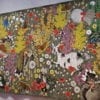

Tapestry is an ancient art form but it can be modern too. During our annual retreat in southwest France at the La Cascade Retreat Center, we visit the Musee Dom Robert see magnificent 20th century tapestries designed by a local monk. We wanted to share this inspirational feast for your eyes in this post, Modern Tapestries – Redux. As this Thanksgiving season reminds us, we are thankful for creative adventures both in person and online! Won’t you join us this summer for a fabulous fiber art adventure?
Dom Robert was born in the early 20th century. After attending art school in Paris and working briefly as an artist he returned to the French countryside and joined an order of Benedictines. While he participated in the community life of the Monastery, he also continued his artistic endeavors, drawing scenes of the area’s flora and fauna. His artistic and spiritual inspiration was often drawn from the natural world.

As his body of work grew, so did is notoriety as an artist. The small sketches of the natural world became large murals, many of which were ultimately woven into tapestries at the Tabard workshop in Aubusson.

The Don Robert museum which is located in Soreze, France just 2 km from the La Cascade Retreat Center, preserves and exhibits the work of Dom Robert, rotating the exhibited tapestries every 2 years. The museum’s building is an old Abbey school that has been refitted to present the tapestries beautifully.

The first step in making the tapestries was to take a mural and transcribe it into a full-size cartoon. “Cartoons” are the maps used by the tapestry studio to create the woven wool masterpieces. Dom Robert would make a black and white reverse drawing of the mural, then he would divide each element by color and label the color sections to identify the numbered color of the yarn to be used.

The weavers would place the cartoon under the loom, then warp the loom and begin the tapestry making process. Spools of yarn in each color were moved along the under side of the tapestry to capture the designs on the cartoon. Slowly a team of weavers would bring the designs to life.

The process is the same one used by tapestry weavers in previous centuries.

The results are rich and textural, but the designs are modern, occasionally whimsical and always colorful.


It is recorded that he had periods of conflict in his monastic life due to his personal success as an artist. But he did not abandon his art, adding to his Four Seasons series and also exploring sea life, themes from the Bible and accepting commissions from houses of worship.

Seeing his work develop through the sketches, compositions, cartoons and finished tapestries was so illuminating and timely as the La Cascade participants were considering their development as creative stitchers and artists in fabric.

Dom Robert’s modern sensibility of composition and use of color will certainly serve as an influence on our own work, though I doubt we will take up tapestry making.

How lucky that this lovely museum is so close to our home away from home in France. Maybe you will consider visiting it with us in the future. We still have spaces available in this year’s retreat, Chasing Coco in Enchanting France, where we will play with the Chanel methods for sewing jackets and vests and some modern embellishment techniques to make your own creation unique.
Look for more pics of Dom Robert tapestries in this week’s social media posts! If interested, see the work of other modern tapestry artist’s work at this gallery.